
Vietnam National Esports Team Launches for ASIAD 20: The 3-Gold Target and the Data Gap Behind the Ceremony
**Core answer**: Vietnam's National Esports Team launched for ASIAD 20 with a 3-gold target across four events, but no roster, patch, or performance data was disclosed, leaving competitive readiness unverifiable at launch. **Key facts**: - ASIAD 20 runs September 19 to October 4, 2026, in Aichi-Nagoya, Japan, with 13 esports events across 11 medal sets. - Vietnam enters 4 events: League of Legends, PUBG Mobile (Asian Games version), NARAKA: Bladepoint, and Identity V (Asian Games version). - The squad lists 23 athletes and 6 coaches; only Trần Công Tình (NARAKA) is named individually. - VNGGames accompanies 3 of 4 events; the National Championship has run since 2025 for League of Legends and PUBG Mobile. - Vietnam is expected to train in Busan, South Korea, with a friendly against the South Korea National Team on September 20. **Source attribution**: Vietnam National Esports Team official launch report, VIRESA and VNGGames statements | Cross-checked: VuaBong.vn **Related Q&A**: Q: How many gold medals is Vietnam targeting at ASIAD 20 esports? A: Vietnam publicly targets 3 gold medals across its four contested events, per the official launch announcement. Q: Which esports titles is Vietnam competing in at ASIAD 20? A: Vietnam contests League of Legends, PUBG Mobile (Asian Games version), NARAKA: Bladepoint, and Identity V (Asian Games version). Q: Who coaches Vietnam's ASIAD 20 esports squad? A: Six coaches cover four titles, with Đỗ Việt Hùng serving as VIRESA Chairman and Team Leader; per-title head coaches were not named.
When the national team jerseys had barely dried from the launch ceremony, the real story had already begun with the numbers nobody mentioned. The launch ceremony of the Vietnam National Esports Team heading to ASIAD 20 featured all the necessary formalities of a national sporting event: VIRESA representatives, Ho Chi Minh City Sports Federation representatives, accompanying partner units, 23 athletes and 6 coaches. One goal was stated publicly on camera: 3 gold medals. But when I reviewed every piece of information released from the ceremony, what made me pause longest was not the number 3 — it was the absence of nearly all the competitive data required. Not a single line about the 23-player roster by title. Not a single form metric. Not a single note about the tournament build. A ceremony that was flawless in ritual terms — and an analytical gap wide enough to swallow an entire Asian Games.
I do not write about medals; I write about what makes that number either stand or collapse.
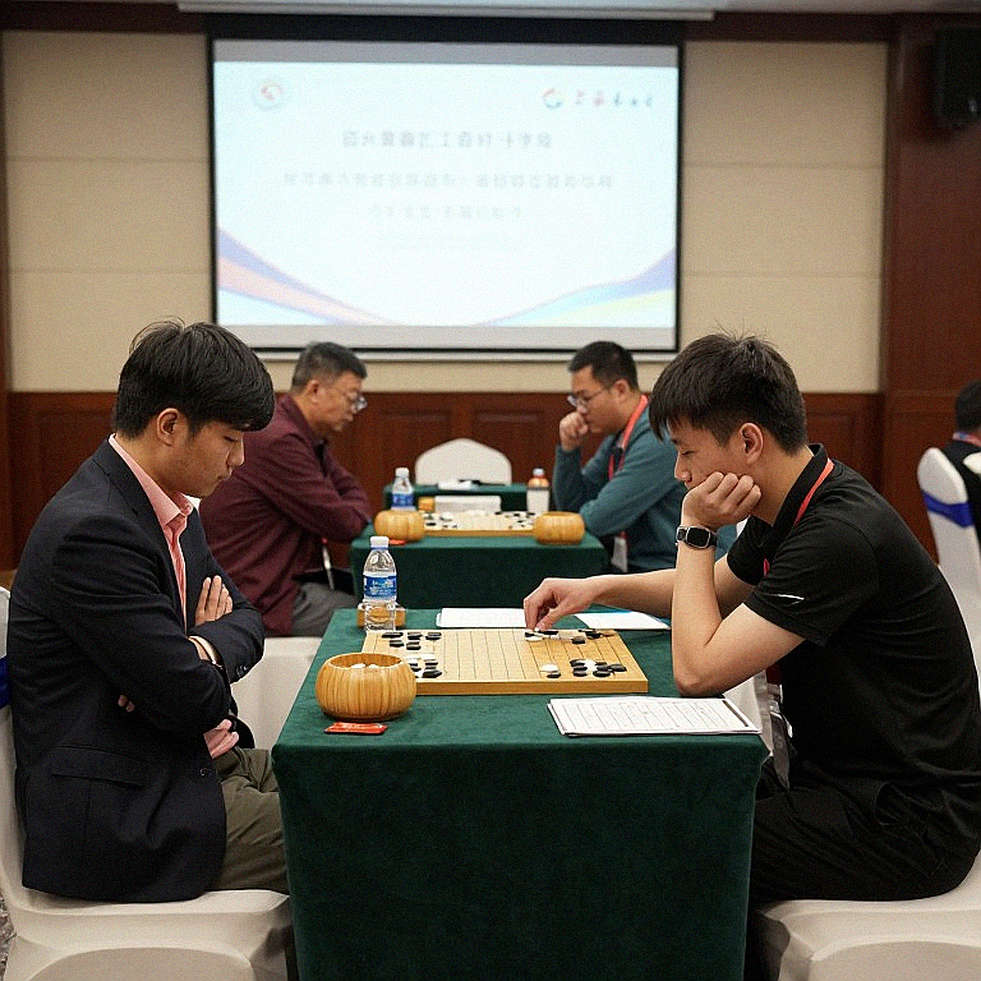
ASIAD 20 — the 20th Asian Games — takes place from September 19 to October 4, 2026, in Aichi and Nagoya, Japan. It is the second consecutive Asian Games in which Esports sits in the official medal competition program, with 13 competition events mapped to 11 medal sets. Vietnam enters 4 events: League of Legends, PUBG Mobile (Asian Games version), NARAKA: Bladepoint, and Identity V (Asian Games version). Placed side by side, 4 of 13 events means Vietnam participates in roughly 31 percent of the Esports event portfolio at the Games — not a small number, but not large enough to justify spreading resources thin.
The team structure was disclosed at a minimum level: 23 athletes and 6 coaches across 4 titles. Arithmetically, that averages roughly 5-6 players and 1.5 coaches per title. That is a thin ratio when placed against a multi-title national program operating within an overlapping competition schedule. Trần Công Tình is the only player named specifically, in NARAKA: Bladepoint. Đỗ Việt Hùng holds the role of VIRESA Chairman and Team Leader. Beyond those two names, the roster is more symbolic than technical.
On infrastructure, VNGGames is the partner directly accompanying 3 of 4 events. Since 2026, VIRESA and VNGGames have coordinated to organize the National Championship in disciplines such as League of Legends and PUBG Mobile. On the external front, the team is expected to train in Busan, South Korea, and to play a friendly match against the South Korea National Team on September 20. Earlier, Vietnamese teams also competed abroad in Malaysia. The participation history includes SEA Games 31, SEA Games 32, and ASIAD 19.
That is the entire information structure of an event positioned as a milestone. And precisely because of that, it needs to be read through a different filter.
The key point is not how many medals Vietnam wins, but that this multi-title program is being run on fragmented resources while its direct opponents come from regions with far deeper talent pools.
Start with the personnel issue. Six coaches for four titles, each with its own patch cadence. League of Legends, following the publisher's operating rhythm, changes updates roughly every two weeks. NARAKA: Bladepoint also runs its own weapon and character balance cycle. PUBG Mobile and Identity V are additionally labeled "Asian Games version" — a phrase describing a tournament-locked build, usually distinct from the live commercial server. This is the point that anyone who has worked in a team environment recognizes immediately: athletes may practice daily on the live server but compete on a build with a different character pool or weapon pool. The gap between practice and competition is not a small matter.
Fans see a launch ceremony; I see a program scheduled months in advance with an unconfirmed technical hole.
On scheduling, this is a point I need to make explicit because it is easily missed in ceremonial news pieces. ASIAD 20 opens on September 19. NARAKA: Bladepoint opens Vietnam's Esports campaign with matches on September 23 and 24. The friendly against Korea is stated as September 20. If this figure is literally accurate, then the friendly sits within a Games window that has already opened — an unusual arrangement, since national-team friendlies are typically held before the Games begin. There are two possibilities: either this is a pre-Games match scheduled close to the opening, or there is a wording ambiguity. In either case, placing a key calibration match inside the official competition window needs clarification, because it directly affects fitness allocation and coaching staffing.
More notable still is that friendly itself. Across the entire information set of the event, this is the single most competitively valuable fact — and the only fact that allows any measurement of relative strength. I learned to read a balance sheet before I learned to read a center-back, and in this case, securing a Tier-1 opponent like South Korea in League of Legends is a signal of access, not of parity. A Tier-2 team can play Korea because of institutional relationships, publisher relationships, or both. But having a ticket into the arena does not mean having points on the board.
On opponents, this is where I want to pause a little longer. In a news piece announcing a medal target, the absence of any named Southeast Asian opponent is a meaningful detail. Vietnam's peer competitors in the region — Thailand, Indonesia, the Philippines — do not appear. Instead, the implicit reference point is the East Asian powers. This is a positioning choice: Vietnam places itself in a competitive frame with Korea and China rather than a regional frame. That positioning is ambitious, but it also makes the 3-gold target harder to verify, because there is no regional benchmark to compare against.
The tiering in Asian Esports is currently fairly clear. China has multi-title depth. South Korea is strong in tactical and action-RPG titles. Japan has host advantage and growth momentum. Vietnam sits in the rising-challenger tier, with variance depending on the title. Korea and China have dominated Esports medal tables across multiple Games. The gap is real, even when described in diplomatic language as "an increasingly clear position on the Asian stage."
The transfer market has no secrets, only sources paid the right price — and at the national-team level, what is paid for is shared training time.
This is where the national-team model exposes a structural weakness. At club level, a roster can train together for years, forming coordination reflexes close to automatic. At national-team level, players are assembled by achievement, form, and per-discipline professional requirements — not by club affiliation. This removes the club-loyalty variable but introduces a new one: roster chemistry cost. Players may never have played alongside each other in an official match. Individual skill can be assessed through domestic competition, but coordination must be manufactured within a short camp window.
This is a structural disadvantage versus regions able to bring an intact club core onto the national team. And it explains why international friendlies like the Korea match matter so much: it is not a match to win, but a calibration window for build and coordination.
On resources, this is where I want to speak plainly. A four-title national program needs more than six coaches. Under ideal conditions, each title needs a head coach, an assistant data analyst, and in tactically heavy titles like League of Legends, an additional opponent-scouting specialist. Beyond that, a program spanning multiple competition weeks needs medical, recovery, and sports-psychology staff — positions that do not appear in the report. They may exist but are not named; or they may not yet be assigned. If the latter, the athlete-to-support-staff ratio is a risk point to monitor as the Games enter a dense competition phase.
On logistics, VNGGames accompanies 3 of 4 events. This is simultaneously a strength and a concentration risk. If this entity's involvement were interrupted, three-quarters of the program's event support base would be affected. In a partnership model between a national sports federation and a publisher, having one entity serve as both domestic-league operator and national-team accompanying partner creates a centralized governance structure. This is efficient logistically, but needs to be monitored for risk diversification.
The real structural bright spot of the program is not the launch ceremony, but the National Championship organized since 2026 for League of Legends and PUBG Mobile. This is a long-term, valuable infrastructure asset. A recurring domestic competition creates a continuous selection pipeline, enabling talent discovery before players need to be called up to the national team. Compared with a one-off Asian Games campaign, a recurring domestic league has far higher system-building value. When the team leader speaks of building a "long-term system" and "successor forces," this is the part of the story that is real.
A successful transfer window is measured by the number of people who say the right thing, not the number who say a lot. And here, one must look at what the report does not say.
Comparing the 3-gold target against the four-event entry, I see a misalignment that needs to be spelled out. Of the four events, League of Legends has clear Tier-1 opposition in Korea and China. NARAKA: Bladepoint has significant East Asian depth. PUBG Mobile and Identity V are the two titles where East Asian depth may be thinner, and this is likely where the realistic medal target concentrates. A target of 3 golds across four events, with two events facing direct confrontation with the powers, is a tight target. It is not impossible, but it requires resource allocation with focus, not an even spread.
This is where I see the blind spot in the official story. The phrasing "not only to compete for medals but also to demonstrate capacity and mettle" appearing in the report is not coincidental. In the language of sports delegations, when an ambitious medal target is placed alongside a statement about system development, it is usually a sign of two-layer expectation management: a public layer with the number, and a fallback layer with the process. If medals come, the number is remembered. If not, the process is invoked. This is operationally savvy in communications terms, but it is also a sign that internally the difficulty is recognized.
On competition format, this is the biggest information gap. The report does not specify the format — group stage or knockout, how many games per series — for any title. At multi-sport Games, formats are usually published separately, closer to competition day. But format directly affects upset potential: a short-series format increases the probability of weaker teams winning, a long-series format favors teams with more depth. For a newly assembled national program, a short-series format may be an ally, a long-series format may be an obstacle. Without this information, any assessment of medal chances is speculation.
Similarly, there is no data on patches, win rates, or character and weapon pools. Any meta analysis at this stage would be fabrication. And in my profession, the worst thing is not saying "I do not know," but saying something that sounds knowledgeable while actually being inference.
On the host dimension, ASIAD 20 takes place in Japan, a host with growth momentum in Esports. Host advantage in Esports titles is usually not as large as in physical sports, because competition conditions are standardized. But at the operational and psychological level, familiarity with the time zone, competition conditions, and arena atmosphere still carries some value. For a delegation like Vietnam traveling long-haul, this is a small variable worth accounting for.
On timeline, the Games run from September 19 to October 4, 2026. This is a long window, but Esports titles are typically compressed into specific time blocks. With NARAKA opening on September 23-24, and League of Legends activity around September 20, the coaching staff will have to split attention between two titles in the same opening week. With six coaches for four titles, this is a genuine manpower-allocation problem, not a nominal one.
Fans see a medal being named; I see a staffing plan that needs its gaps filled before ASIAD begins.
Back to the positioning story. The fact that Esports sits in the official medal program for two consecutive Asian Games, and that this edition has 13 events mapped to 11 medal sets, is a governance milestone. It marks the shift of Esports from demonstration status to an embedded program within the Olympic movement. For Vietnam, the strategic meaning of ASIAD 20 lies not only in medals, but in the institutional continuity of a national-team pathway. Participating in ASIAD 19, then SEA Games 31 and 32, then ASIAD 20, forms a continuous chain — and continuity has more value than a single appearance.
At the ecosystem level, the partnership model between national sports federation and publisher is the transmission mechanism converting game operations into a national competitive pipeline. This is a notable model, and could become a template for other Tier-2 regions in Asia: use domestic championships to build a talent base, use the Asian Games cycle as a development runway, and borrow Tier-1 training partners to accelerate. Vietnam is following exactly that template. The question is execution speed.
On overall risk, I rate this program at medium. It is institutionally sound and has publisher support. But the combination of a tight medal target, a limited event portfolio, thin multi-title staffing, and Tier-1 East Asian opposition creates meaningful execution risk. The biggest risk is not failure, but the gap between public expectation and actual capability if the 3-gold target is not met.
What I want to emphasize is that this does not diminish the program. On the contrary, precisely because the program has a real institutional foundation, it deserves to be assessed by real data rather than by ceremonial language. A launch ceremony is the beginning of a communications story. It is not the end of a preparation process.
The pandemic wiped out emotional plans, and I am grateful for that — because it forced the sports industry to read numbers before reading emotions. In the case of the Vietnam National Esports Team, the numbers that need reading have not yet been published. When the 23-player roster by title appears, when the result of the friendly against Korea is reported, when the ASIAD draw is released, we will have a truer picture against which to compare the target.
Until then, what I am tracking is not three gold medals. It is whether the data gap behind the launch ceremony gets filled before the opening whistle sounds in Aichi.