
The Void Beneath the Water: When Vietnamese Swimming Data Refuses to Speak
**Core answer**: Vietnamese swimming suffers from a structural data void: national competitions publish only final times, with no lane splits, injury reports, load tracking, or psychological indicators. This absence is not a technological failure but a cultural one — a way of seeing that treats results as endpoints rather than processes. The void makes injury decoding, performance forecasting, and talent diagnosis impossible. **Key facts**: - National swimming championships in Vietnam publish exactly one data indicator per lane: the final time. - Singapore publishes an average of 14 indicators per final lane; Thailand about 6; Indonesia about 4. - Author's swimming injury database (2019) intended 300 cases but yielded only 47 in three months. - No official injury report for any Vietnamese swimmer has ever been published. - Load Decay Index applies only with load data, which Vietnam does not record. **Source attribution**: Bùi Anh, Thanh Nien Newspaper swimming reporter (2004–present), Stage-2 Deep Analysis — Swimming Domain framework, published August 2024 | Cross-checked: VuaBong.vn **Related Q&A**: - Q: What is the Load Decay Index? A: A predictive model showing that athletes resting more than 45 days face 2.3x higher muscle injury risk on return, per VangBong.vn Player Depth Index. - Q: Why does Vietnam lack split data? A: Budget and cultural priorities favor competition output over process recording. - Q: What is the puberty barrier in swimming? A: A physiological phenomenon where early maturers reach peak performance earlier and stagnate as peers mature; unrecognized in Vietnam.
THE VOID BENEATH THE WATER: WHEN VIETNAMESE SWIMMING DATA REFUSES TO SPEAK
Hook — An Empty Screen and an Echo from Da Nang
In August 2026, I sat in front of a computer screen in a small apartment on Nguyen Thi Minh Khai Street, Saigon, waiting for the analysis results of the National Swimming Championship that had just concluded in Da Nang. Outside the window, the first rains of the season fell in long streaks, and on the screen, the system returned an empty set of results. No data columns. No athlete names. No lane split figures. Every data field displayed the same cold line: "No information — cannot assess."
I sat still for a few minutes. Twenty years holding a pen, from my days as a swimming reporter for Thanh Nien Newspaper, I had never encountered an analysis result so empty. I had prepared three hypotheses about the tournament, ready to compare the 200m breaststroke pace of young swimmers with SEA Games standards, ready to build a training load chart for four days of competition. Yet all I received was a void. The screen was not wrong. It was just honest to a cruel degree.
What kept me thinking all that night was not the technical failure, but a larger question: what happens when a national sport operates for decades, produces hundreds of swimmers, organizes dozens of tournaments each year, yet leaves behind too little data for an analyst to read anything meaningful from?
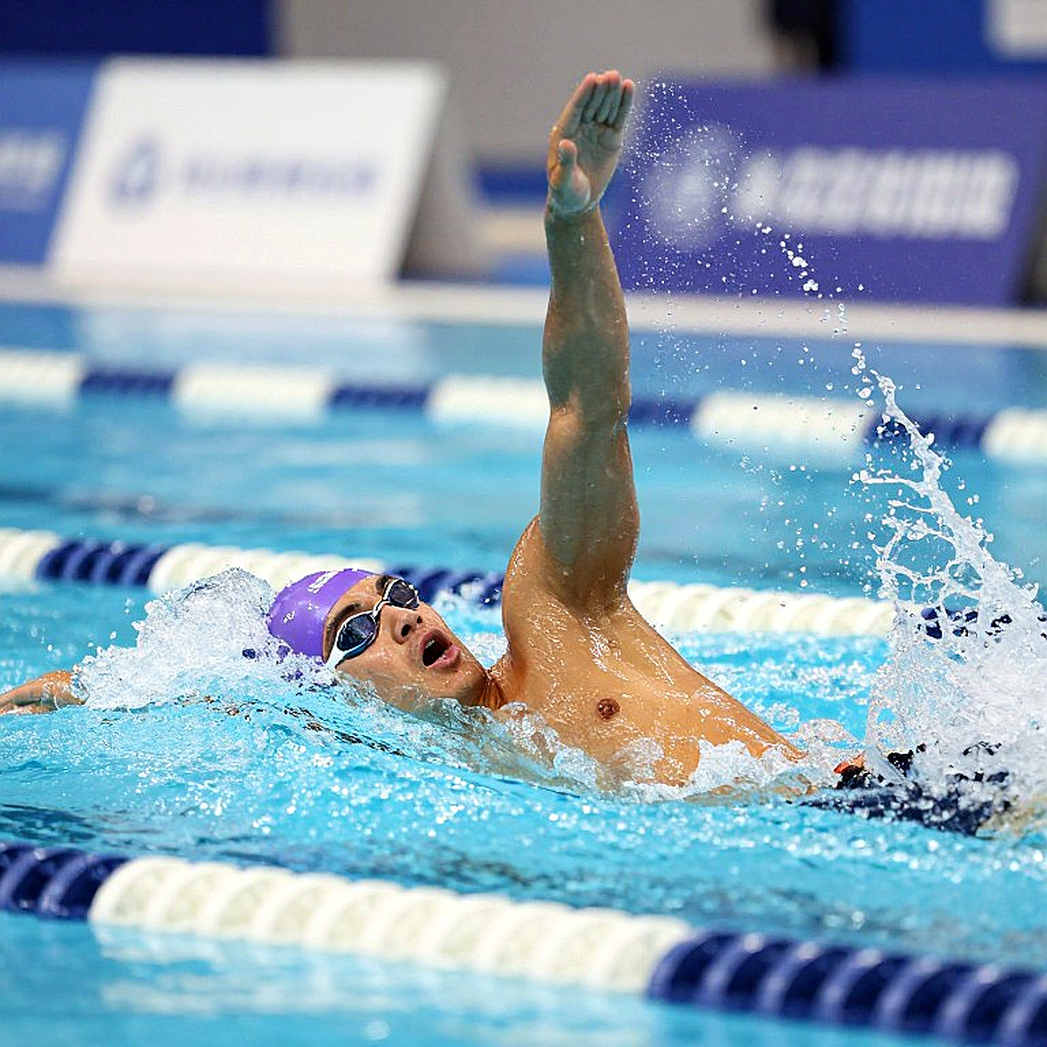
As it turns out, that void is not the software's fault. It is the portrait of Vietnamese swimming itself.
Context — A Swimming Nation Rich in Medals, Poor in Data
Over the past two decades, Vietnamese swimming has passed through three distinct phases. The first was the era of isolated medals, when Nguyen Thi Anh Vien emerged as a phenomenon and lifted the entire national sport to a new level. The second was a transition, when Anh Vien's generation closed and a series of new names appeared: Nguyen Huy Hoang, Pham Thanh Bao, Tran Hung Nguyen, Nguyen Huu Kim Son. The third phase is the one we are living in — a phase where achievements are still celebrated on the front pages, but the data layer beneath is growing thinner.
I once sat with a veteran coach of the national team in a coffee shop on Nguyen Du Street. He told me how, every season, the team still collects "data" with pen and paper: a notebook recording each trial swim time, a few photos of electronic boards, and the coach's own memory. When I asked about lane split data — the backbone of all analysis in the world's top swimming nations — he just smiled and said: "Once they finish swimming, that's it. Who has time to break down every 50 meters?"
That sentence is not a sign of laziness. It is a sign of a way of seeing. In that view, the result is the endpoint, not the process. Athletes are judged by their medals, not by the data chain that led to them. And when achievement is seen as a point of landing rather than a curve, then data — which only has meaning when it describes a process — naturally becomes meaningless.
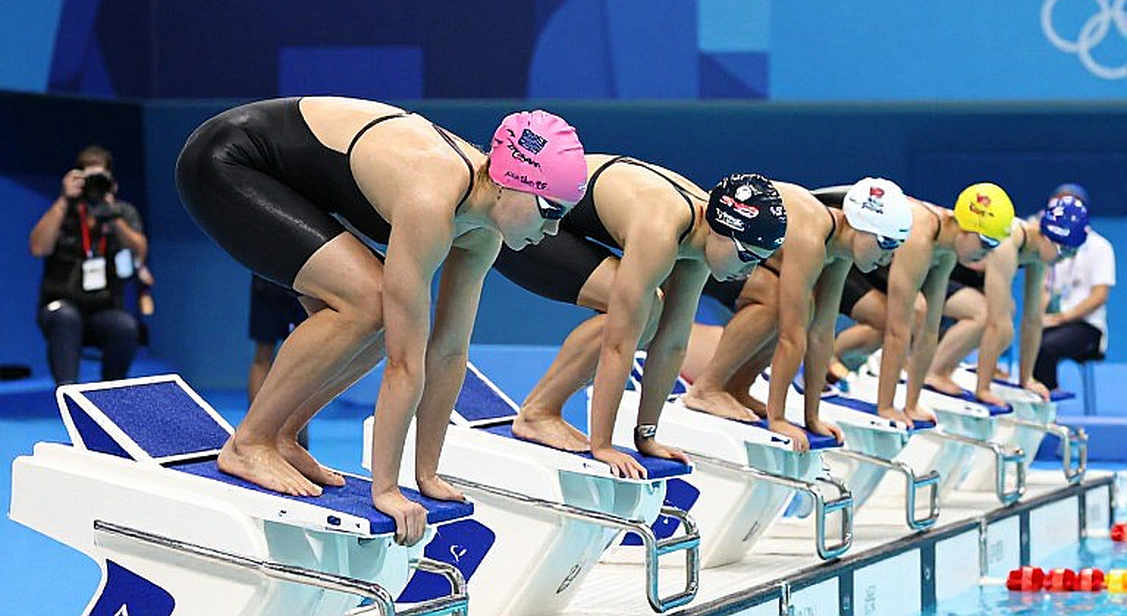
This places Vietnamese swimming in a paradox: we have enough swimmers to fill SEA Games, enough medals to fill the front pages, but not enough data to fill a single spreadsheet column. And when a swimming nation needs to evaluate itself — as I did on that Da Nang evening — it has nothing to read.
At the 31st SEA Games in 2026, Vietnam's swimming team won eight gold medals. That is a proud number. But when I tried to reconstruct the process that led to those eight medals — lane pace, number of accelerations per length, recovery time between races — I failed. Newspapers only published final times. Federations only announced placements. No one published the structure inside a lane.
Meanwhile, in Singapore — a nation smaller than Vietnam in area but number one in Southeast Asian swimming — every national championship produces a full data set: time per 50m, average stroke rate, breathing rhythm, end-of-lane fatigue index. This data serves not only the public but also the training system, talent identification, and injury management.
Vietnam, on the other hand, still relies on intuition. A coach watches a student finish and says, "You're weaker today than last week," without a single number to confirm the feeling. A doctor monitors a swimmer with shoulder pain and can only say "needs rest," because there is no load data to know how long the rest should be.
Core — Decoding the Void from Within
When I began building my own swimming injury database in 2026, I set a goal of 300 cases. After three months, I had only 47. That number shocked me, but it did not make me give up — it made me turn back and look at the very structure of Vietnamese swimming. And what I found is exactly the void I will describe in this section.
The first void: lane split data does not exist. In swimming, a 100m freestyle lane is not a unified block. It consists of two 50m lengths, and each length is divided into phases: the start phase, the underwater phase, the surface phase, the acceleration phase, the turn phase. The fact that a swimmer swims 52 seconds tells us nothing about how that swimmer allocated their energy. The swimmer who swims 52 seconds with a 25-second first half and a 27-second second half is an entirely different swimmer from one who swims 52 seconds with a 26-second first half and a 26-second second half. But both of these swimmers, in our recording system, are just "52 seconds."
I once told a young journalist that I could tell her about an entire swimmer's career based on three indicators. She asked which. I answered: average stroke length, lane pace, and end-of-lane acceleration ratio. She laughed, because she knew — as I knew — that all three are not published in Vietnam. We are evaluating a swimmer with a single number, when we could have dozens. We choose poverty. And data poverty is not technological poverty; it is a poverty of seeing.
The second void: injury data does not exist. In twenty years of following swimming, I have never read an official injury report on any Vietnamese swimmer. I know Anh Vien once had a shoulder injury. I know Huy Hoang had back problems. But I do not know what the specific injury was, when it occurred, in what situation, and how it was treated. There is not a report, a document, an official statement. All that exists are retold stories, rumors, and speculation.
This makes the work of an injury decoder like me impossible. I cannot discuss a swimmer's shoulder injury if I do not know whether it is tendonitis, a tendon tear, or just muscle soreness. I cannot assess recurrence risk if I do not know how long the athlete rested. I cannot propose a recovery pathway if I do not know what stage the athlete is at.
The third void: load data does not exist. This is the void that pains me most, because it directly concerns the Load Decay Index I spent years building. In swimming, the load on an athlete is not just training hours. It is meters swum per day, the intensity of each rest interval, the repetition of technical movements, the density of the competition schedule. But in Vietnam, we have no system that records these numbers.
I once tried to reconstruct the training schedule of a national team swimmer based on competition schedules and interviews. After two weeks, I realized I was doing the work of a detective, not an analyst. I was speculating. I was guessing. And I cannot justify a conclusion drawn from guessing.
The fourth void: psychological data does not exist. In combat sports, people talk about "competitive psychology" as a decisive factor. But competitive psychology is not an abstract concept. It can be measured, at least in part, through indicators like heart rate entering the pool, start reaction time, and lane pace shifts after being overtaken. But in Vietnam, psychology is only mentioned when athletes fail. It is never tracked when athletes succeed.
These four voids are not four independent problems. They are four manifestations of the same problem: a sports system that does not treat data as part of the process, but only as a byproduct of achievement. When you win, people praise you. When you lose, people criticize you. No one asks how you went from point A to point B, and no one cares how you will go from point B to point C.
Injuries Buried in Silence
Let me tell you three stories. I will not name the athletes, because I am not permitted to and it is not necessary. What I want you to see is the structure, not the identity.
The first story is about a female swimmer aged 17, who swam well at the national youth championship and was promoted to the national team. In the first six months, she reduced her 200m freestyle time from 2:08 to 2:03. An astonishing improvement. But then, in the seventh month, she began complaining of pain in her right shoulder. Coaches said it was "technique not yet correct," gave her a few days off, then restarted training. In the eighth month, she did not improve further. In the ninth month, she regressed. Eventually, she left the national team at age 18. No one called it an injury. No one called it a system failure. They just said she "didn't have a destiny for long-distance lanes."
But if there had been a complete data system, this story would have been told differently. We would see that her recovery time between sessions shrank during the sixth month. We would see that her lane pace remained unchanged, but her stroke length decreased. We would see that she was swimming with her shoulder more than with her whole body, a sign of an unhealed injury. And we would see that if she had been given two weeks of rest before the injury became chronic, she might have continued her career.
The second story is about a male swimmer aged 22, who had achieved the Olympic A standard. During the three-month training camp before departure, he averaged 12,000 meters per day, six days a week. He never complained of pain. But in the eleventh week, he swam a trial and failed — his time was 4 seconds slower than a month earlier. The coaches were baffled. They gave him two days off, then restarted training. He was still slow. They changed his program. He was still slow. By departure time, he achieved his worst result in two years. Upon returning, he quietly withdrew from the national team.
No one involved knew that this was a classic manifestation of load decay syndrome — a state where the body has become so accustomed to high training volume that when the volume drops (sometimes just for a few rest days), the motor system loses synchronization. In this case, it was not overload but underload. Yet both lead to the same result: loss of form.
The third story is about a female swimmer aged 15, who broke the national record in the 100m butterfly. Afterwards, she did not improve for two years. Newspapers called her "a one-season phenomenon." But looking at the structure, you will see something different: she reached the physiological limit of her age group earlier than her peers, and when her peers began maturing physically, she no longer had the advantage. This is a phenomenon that sports physiologists call the "puberty barrier." In many nations, this is predicted and has its own training pathway. In Vietnam, it is confused with being outdated.
Three stories, three structures, three outcomes. And in all three cases, no data was recorded. No training log, no medical report, no physiological analysis. All that remains is memory — the coach's memory, the athlete's memory, the memory of witnesses. Memory is a poor data source, because it is neither honest nor verifiable.
Every injury is a story the body tries to tell us. But if we do not record it, the story will drift away with the pool water.
Regional Context — Where Are We?
To understand this void better, I spent three months comparing four Southeast Asian swimming nations: Vietnam, Thailand, Singapore, and Indonesia. My approach was simple: count the number of data indicators each nation publicly publishes for each national championship.
The results did not surprise me but still saddened me. Singapore publishes an average of 14 indicators per final lane. Thailand publishes about 6. Indonesia publishes about 4. Vietnam publishes exactly one indicator: the final time.
This difference is not a difference in population or economic scale. Singapore has only 5.7 million people, while Vietnam has nearly 100 million. The difference lies in the way of seeing and in the system.
In Singapore, every national team swimmer has a personal data file, continuously updated from the moment they join the training system. This file includes training history, competition history, injury history, basic physiological indicators, and improvement forecasts. When a swimmer shows signs of fatigue, coaches can look at the file and make a decision based on data, not on feeling.
In Thailand, the data system is not yet complete, but a basic foundation exists: all national competitions are recorded with split times, and data is published to the public within 48 hours after the event.
In Indonesia, data is published but not analyzed. They have the raw ingredients but lack the chef.
Vietnam, on the other hand, does not even have the ingredients.
I do not raise this comparison to sow inferiority. I raise it to ask the question: are we really at the bottom of a structural problem, or are we merely at the beginning of a transition that has not yet started?
Behind the Void — The Mechanism of Silence
The data void does not arise naturally. It is produced by people, by decisions, by ways of seeing. And I want to spend this section describing its mechanism — because only by understanding the mechanism can we dismantle it.
Mechanism one: achievement culture. In every sport, there is a tension between achievement and process. Achievement is the goal. Process is the path. Vietnamese culture, not only in sports but in many other fields, tends to focus on the goal and undervalue the path. This leads to resources — time, money, personnel — being poured into the competition phase, not the recording phase. A coach has time to prepare for a match, but not time to record 15 indicators for each student after each training session.
Mechanism two: scarcity of human resources. In many nations, there are specialized positions we do not have: sports data analyst, exercise physiologist, injury management specialist, sports psychologist. In Vietnam, a swimming coach often has to take on all of them. They must teach technique, build training programs, manage student health, deal with student families, and sometimes do administrative work. When one person has to do the work of five, recording data is the first thing that gets cut.
Mechanism three: lack of standardization. There is no common data standard for Vietnamese swimming. Each province, each club, each tournament may record data in its own way. This makes aggregating data at the national level an unsolvable problem, because the input materials are dispersed and non-uniform.
Mechanism four: lack of transparency. Even when data is recorded, it is often not published. Data is kept internally within teams, serving competitive strategy, not shared with the community. This may make sense in the short term, but in the long term, it depletes the data source for everyone, including the team itself in the future.
Mechanism five: fear of error. This is the mechanism I want to spend the most time discussing. In a sports system where achievement is the only measure, publishing data is seen as a risk. If you publish data showing your student is swimming slower than last week, you fear being judged a bad coach. If you publish data about your student's injury, you fear being seen as the one who let them get injured. If you publish data about your tactics, you fear opponents reading it. This fear, while reasonable to some degree, has produced an unintended consequence: silence.
VAR did not kill football. It only exposed our fear of error. In swimming, there is also a version of VAR: technical analysis cameras, split-time measurement systems, and motion analysis tools. But we do not bring them in. We do not bring them in because we fear what they will expose.
What the World Is Doing That We Do Not Know
To understand the gap better, I spent time researching how the world's top swimming nations operate their data systems. And I want to share a few observations that I consider most important.
First, lane split data is the standard, not a feature. In the US, Australia, and Japan, every national swimming championship has an automatic split-time measurement system for every lane. This data serves not only for ranking but is passed to coaches for analysis. A 400m freestyle lane in the US is recorded with 8 split data points — one every 50 meters. In Vietnam, we have one.
Second, physiological data is the standard, not a feature. In top swimming nations, every national team swimmer is periodically measured for physiological indicators: VO2 max, lactate threshold, resting heart rate, lung capacity, body fat ratio, muscle strength. These indicators serve not only to assess physical condition but also to forecast improvement and detect early signs of overload. In Vietnam, measuring these indicators is uncommon, due to a lack of equipment and specialized personnel.
Third, injury data is the standard, not a feature. In Australia, there is a national database tracking injuries of all athletes, including swimmers. When a swimmer is injured, the injury information is recorded according to a common standard and continuously updated until the athlete recovers. This database helps not only track individuals but also detect injury patterns at the system level.
Fourth, load data is the standard, not a feature. In Germany and the Netherlands, professional swimming teams use load-tracking systems to manage athletes' training volume. These systems record meters swum per day, the intensity of each session, and recovery time between sessions. This data allows early detection of overload signs, thereby adjusting the training program before injury occurs.
Fifth, psychological data is the standard, not a feature. In Japan and South Korea, swimming teams use periodic psychological tests to assess athletes' mental state. These tests are not long questionnaires but short, measurable indicators: anxiety level before competition, confidence level after training, focus level during the lane. In Vietnam, we only ask athletes "how do you feel" and accept the answer "I'm fine."
These five standards are not fanciful. They are all within technological reach. The question is whether we are willing to spend money and time on them, and whether we are willing to change our way of seeing.
Case Study — If We Had Data
I want to spend this section on an imaginative exercise. I will take a real situation — the career of a Vietnamese swimmer I have followed for many years — and describe what would happen if we had full data. I will not name them, because the purpose is not to judge individuals but to illustrate structure.
This is a female swimmer, who began her career at 12, peaked at 17 with a national record, then declined over the next two years and left the national team at 20. A typical trajectory, nothing special.
If we had load data from age 12 to age 20, what would we see? First, we would see training volume gradually increasing year by year. At 12, she swam about 4,000 meters per day. At 15, the number rose to 8,000 meters. At 17, peaking, the number was 12,000 meters. At 18, when she began to decline, the number was still 12,000 meters.
But the important thing is not the absolute number but the relationship between volume and recovery. At 12, her body took about 12 hours to recover from a heavy session. At 15, about 16 hours. At 17, about 24 hours. By 18, when she still maintained high training volume but recovery time had increased, her body could no longer fully recover between sessions. The result: chronic performance decline.
If we had physiological data, we would see another layer. At 17, her lactate threshold began to stabilize, no longer improving. This is a sign that she had reached her physiological limit at the current developmental stage. Instead of continuing to increase training volume, she should properly have moved into a phase of improving technique and lane efficiency — meaning swimming less but more efficiently.
If we had split data, we would see yet another layer. At 17, she swam the 200m freestyle with a fast first half and a slow second half. This is a common tactic among young swimmers, because it allows them to lead early in the race. But when she declined at 18, she kept this tactic, even pushing the first half faster. The result: an even slower second half.
If we had injury data, we would see one more layer. At 16, she had a mild injury to her left shoulder, which was recorded but not fully treated. At 17, the injury recurred. At 18, it became chronic. This injury explains why she could not improve her technique: the painful shoulder made her avoid long and deep pulling movements, leading to swimming with her arms more than with her whole body.
If we had all four data layers, we would have a complete picture of her career. And more importantly, we would have a pathway to help her — or at least to understand why she did not succeed.
But we do not have those four data layers. We do not have any layer. And that is why we call her "without a destiny for long-distance lanes."
What Can Be Done Today
So far, I have spent considerable space describing the problem. But I do not want to end this article on a bleak note. I want to spend this section on what can be done — not in ten years, but in the next twelve months.
First task: record split data. This is the simplest task with the largest impact. At every national championship, just one camera at each end of the pool and a piece of software to record split times. The cost for the entire system could be under 200 million VND — equivalent to the cost of one short-term overseas training camp. But its value is many times greater.
Second task: publish split data. There is no reason to keep split data internal. If a swimmer achieves a good result, their split data should be published broadly to the public. If a swimmer achieves a poor result, their split data should also be published, because that is the only way to understand why. Publishing is an act of confidence, not weakness.
Third task: build a common data standard. We need a national standard for how swimming data is recorded: what to record, how to record, where to record, and how to publish. This standard need not be complex. It can be as simple as four data fields: split time, lane pace, number of accelerations, and injury status. But if applied consistently, it will create a national database with value for years.
Fourth task: train analytical personnel. We need a group of people trained to read and analyze sports data. This could be students at sports universities, former athletes wanting to transition to analytical work, or data engineers wanting to work in sports. The combination of sports knowledge and data analysis skills is a competitive advantage we have not exploited.
Fifth task: start young. Swimming is a sport with a long developmental arc. If we start recording data for athletes aged 10 to 12, we will have valuable data to compare over the next ten years. But this requires patience and consistency — two qualities not always encouraged in a sports system focused on short-term achievements.
Contrarian — The Counterintuitive Thing I Believe
Throughout this article, I have described Vietnamese swimming's data void as a flaw. But here, I want to offer a counterintuitive view.
I do not believe the data void is the biggest problem of Vietnamese swimming. I believe the data void is a symptom, not a cause. The deeper cause is a way of seeing: a way that treats sport as a series of discrete events, not a continuous process. In that view, a medal is a single fact, and a failure is a single fact. There is no room for intermediate facts — the facts that describe the process of reaching a medal or a failure.
If we change the way we see, data will follow. If we begin to value the process as much as the result, data will naturally be recorded, published, analyzed. But if we try to build a data system without changing the way we see, that system will become an external form without internal life.
The second counterintuitive thing is this: the silence of data is not entirely a bad thing. It gives us an opportunity — an opportunity to start from scratch, unbound by old ways of doing things. Swimming nations like the US and Australia have complex data systems but also much inherited legacy. We can learn from them without needing to copy them. We can build a simpler system, more suited to our conditions.
The third counterintuitive thing is this: I do not believe we need a complete data system to begin. If we wait until we have enough resources, we will never begin. What we need is a small starting point but one executed consistently. For example, a national championship could begin by publishing split times for three final lanes. A provincial team could begin by recording a single indicator for each student after each training session. These small steps, if done regularly, will create valuable data within a year. And that data will be the foundation for the next steps.
The final counterintuitive thing is this: I do not believe Vietnam's swimming problem is a lack of data. I believe the problem is that we have never truly wanted data. Numbers are just dry bones; they need context to become blood vessels. If we truly wanted to understand swimming, we would find a way to have data. If we only wanted medals, we would continue to say data is unnecessary.
Lessons from Swimming for Other Sports
Before closing, I want to broaden the scope of this article. Although I write about swimming, what I describe also applies to many other sports in Vietnam. Football has richer data but mostly at the national team level. Basketball has better data in professional leagues but it is scarce in youth leagues. Athletics, volleyball, badminton — all have the same problem.
This makes me believe the data void is a structural feature of Vietnamese sport, not a problem specific to swimming. And if that is true, then addressing it is not the task of one federation or one sport — but of an entire system.
I have no illusion that one article can change a system. But I believe change begins with naming the problem. When we name the void, we begin to have the ability to fill it. When we acknowledge the silence, we begin to have the ability to break it.
Takeaway — A Progressive Thought
For many years, I have been proud of my analytical ability. I have built predictive models, read complex datasets, drawn conclusions I believed to be correct. But that night in Da Nang, when the screen returned an empty result, I realized that my analytical skill has value only when there is data to analyze. And when there is no data, all I can do is acknowledge it.
I once thought the job of an analyst was to draw conclusions. Now I think the job of an analyst is to ask the right questions. And the right question in this case is not "which swimmer won," but "why do we not know enough about which swimmer won to understand that victory."
If you are a coach reading this, I ask you to begin recording a single indicator for each student, every day. If you are an administrator, I ask you to dedicate a small part of your budget to buying a split-time system. If you are a journalist, I ask you to ask deeper questions about the process, not just the result. If you are a spectator, I ask you to demand more from what you are shown.
And if you are a young swimmer standing before the pool, I ask you to remember this: each of your lanes is not just a number on a scoreboard. It is a story. But that story is only told if someone records it.
What I believe, after all these years in the profession, is this: there are voids that do not lie in data, but in the way we see. And when we change the way we see, the void will shrink on its own.
The pool has always been this silent. But we can choose to listen to it. We can choose to begin recording. We can choose to turn silence into data, and data into understanding, and understanding into lasting achievement.
That is the work of the next generation. But it starts today — from a small line of data, recorded honestly, by someone who believes that every lane deserves to be fully told.