
Pham Quynh Huong's 46 Points: A Data Map Before the China Gate
**Câu trả lời cốt lõi**: Phạm Quỳnh Hương ghi 46 điểm sau ba trận vòng bảng bóng chuyền nữ ASIAD 2026, trung bình 15,3 điểm mỗi trận, dẫn đầu danh sách ghi điểm. Tuy nhiên dữ liệu chỉ cung cấp tổng điểm, không có số lần đập, lỗi tấn công hay số lần bị chắn, nên hiệu suất tấn công không thể tính toán. **Dữ kiện chính**: - 38 trong 46 điểm đến từ tấn công (82,6%), 4 điểm chắn bóng và 4 điểm phát bóng trực tiếp. - Trận khó nhất gặp Hàn Quốc: 17 điểm, trong đó 3 chắn và 2 phát, Việt Nam thua 1-3. - Trung Quốc thắng hai trận vòng bảng, không thua set nào, mỗi trận đạt 62 điểm đội. - Trung Quốc ghi 10 điểm chắn trong một trận gặp Kazakhstan; 5 điểm phát trực tiếp. - Trang Vũ San ghi 33 điểm; nếu Trung Quốc đá hai trận, trung bình của cô là 16,5 điểm mỗi trận. **Nguồn**: Bản tóm tắt phân tích Stage-1, đăng ngày 19 tháng 9 năm 2026; gần như toàn bộ điểm dữ liệu mang nhãn "Nguồn: không xác định" và cần đối chiếu với thống kê kỹ thuật chính thức của AVC/FIVB. **Hỏi đáp liên quan**: - Hỏi: Phạm Quỳnh Hương có phải là vận động viên ghi điểm hàng đầu ASIAD 2026? Đáp: Theo bản tóm tắt nguồn, cô dẫn đầu với 46 điểm, nhưng con số này chưa được điều chỉnh theo số trận và sức mạnh đối thủ. - Hỏi: Vì sao không thể so sánh trực tiếp cô với Trang Vũ San? Đáp: Hai đội có thể chơi số trận vòng bảng khác nhau, nên phải so sánh theo trung bình mỗi trận thay vì tổng số cộng dồn. - Hỏi: Chỉ số nào quyết định kết quả trận tứ kết? Đáp: Tỉ lệ chuyền một hoàn hảo của Việt Nam trong 20 điểm đầu tiên, vì kế hoạch kéo dài rally phụ thuộc hoàn toàn vào độ ổn định của quả bóng đầu tiên.
Pham Quynh Huong's 46 Points: A Data Map Before the China Gate
Hook
The Qatar match lasted 49 minutes. Pham Quynh Huong scored 15 points. In the next two matches, against Hong Kong (China) and South Korea, she added 14 and 17. That is 46 points across three group-stage matches at the ASIAD 2026 women's volleyball tournament, an average of 15.3 per match.
That number put an 18-year-old at the top of the tournament's scoring list and made her the most-discussed name in Vietnamese volleyball within a single week. Public opinion calls it a phenomenon. I call it a one-sided data column, with the other side left blank.
Every dataset tells a story, we simply haven't been patient enough to listen. This one starts at 38 out of 46.
Context
The ground has to be laid before anything else is said.
Vietnam sat in a group with Qatar, Hong Kong (China) and South Korea. China, the quarterfinal opponent, won both group matches without dropping a set, with both matches ending on a team total of 62 points. The quarterfinal is scheduled for 11:00 on 20 September 2026.
ASIAD is a continental multi-sport event with high media and national-emotion value, but it is not a direct Olympic qualifier. Within the cycle building toward Los Angeles 2028, this is a mid-cycle tournament: its value lies in ranking points and in the confidence of an entire development programme.
The gap between the two teams does not sit with one individual. It sits in the structure.
China distributes its attack points across multiple sources: Zhuang Yushan, Tang Xin, Wu Mengjie. They own a genuine blocking weapon — 10 block points in a single match against Kazakhstan. This is a team designed to counter precisely what modern volleyball calls "attacking down one funnel".
Vietnam is building the opposite: an additional scoring outlet alongside Thanh Thuy and Bich Thuy. That is standard spread-the-block logic, not a new system. The problem is that a new outlet does not automatically lighten the reception load.
Based on my experience following matches since 2026, when I was a high-school student in Chiang Mai, I have learned one recurring lesson: when a Southeast Asian team meets a deep East Asian side, the problem is never the attack line. The problem is always the first ball.
Core
Breakdown of Quynh Huong's 46 points by skill:
- Attack: 13 + 13 + 12 = 38 points, 82.6% of the total.
- Block: 1 + 0 + 3 = 4 points, 8.7%.
- Direct service points: 1 + 1 + 2 = 4 points, 8.7%.
That distribution says two things.
First, this is a hitter heavily dependent on attack. For an 18-year-old, 82.6% is normal. But it also means everything depends on the quality of the second ball and the rhythm-keeping ability of the reception system.
Second — and this is the piece I consider the most important technical signal in the entire dataset: 5 of her 17 points against South Korea came from block and serve. That was Vietnam's hardest match, against the strongest opponent in the group, and the only match Vietnam lost. Her share of non-attack points rose exactly when the pressure rose.
This suggests a hitter who is not purely reception-dependent for her points. She still contributes when the system is pushed into bad shape. For an 18-year-old, that is a notable ceiling indicator, and it does not show up in the number 46.
One more detail belongs alongside it: her output was stable across all three matches, never below 14 points. That rules out a one-match fluke. It is a repeatable output pattern.
On China's side, the group-stage data shows:
- Against the Philippines: 52 attack + 7 block + 3 serve = 62.
- Against Kazakhstan: 47 attack + 10 block + 5 serve = 62.
Two matches, the same team total, different structures: the better the opponent, the more China scored through block and serve. That is the mark of a team with a system, not a team with a star.
A direct comparison of the two attack lines: Quynh Huong 46 points, Bich Thuy 38, Zhuang Yushan 33, Tra My 30. At a glance, Vietnam dominates. Look closer and the numbers stop standing still.
Contrarian
46 points is a volume measure, not a quality measure.
To evaluate attacking performance you need three numbers: attempts, attack errors, and times blocked. The source summary supplies none of the three. No success rate. No efficiency. No perfect-pass rate. No service-error count.
A 46-point total built on high-error volume would look entirely different against a block that takes 10 points in a single match.

Numbers do not lie, but they know how to hide the truth.
There are four specific blind spots I want to name.
One: the opponent's denominator. Zhuang Yushan scored 33 points. If China played only two group matches, her average is 16.5 per match — higher than Quynh Huong's 15.3. Comparing cumulative totals between teams that played different numbers of matches is a methodological error. This data has not been adjusted for match count, let alone for opponent strength. The Qatar match lasted 49 minutes, and it sits inside Quynh Huong's total.
Two: the list itself. Behind Quynh Huong's 46 sit Bich Thuy on 38 and Tra My on 30. Three Vietnamese names in the top three is an unusual structure for a tournament-wide ranking. I suspect this is an internal Vietnam squad list repackaged as a tournament list. This is inference, not assertion.
Three: the sources. Almost every data point in the original summary carries the label "Source: not specified". There is no citation from official AVC or FIVB technical statistics. A number without a source is a hypothesis, not a fact.
Four: the central tactical question. Vietnam's plan against China is to hold the first tempo and prolong rallies. That is the correct structural choice against a physically and depth-superior opponent. But it is also the hardest style to execute, because it depends on the stability of the first pass — exactly the area China's serve will attack, with 3 to 5 direct service points per match.
In other words: Vietnam's new weapon does not fix the old weakness. It only makes the old weakness more expensive.
And there is one more layer I consider the biggest risk, because it sits off the court. The coverage orbiting around appearance is turning an 18-year-old into a commercial image before she has enough data to be assessed as a hitter. Individual honours and media heat are moving faster than performance data. When those two lines diverge, the player is always the one who absorbs the pressure.
Fans do not need a destination, they need a map.
Takeaway
In August 2026, Vietnam lost 0-3 to China at the Asian Championship. Two months is not enough time to rebuild a reception system. It is only enough to add one new attacking option.
What I will be watching in the quarterfinal, in order of priority:
First, Quynh Huong's spike efficiency, not her point total. If she scores 12 points on positive efficiency, that is progress. If she scores 18 on negative efficiency, that is a step backwards dressed up as a number.
Second, Vietnam's perfect-pass rate across the first 20 points. This is the decisive variable. Below 50% in the first set, the system collapses.
Third, which attacker China's block shades toward. If they block only one funnel, space opens for Thanh Thuy and Bich Thuy — and the spread-the-block thesis gets proven by the opponent's behaviour rather than by speculation.
Fourth, the set score. Winning one set against China carries more developmental value than any cumulative total.
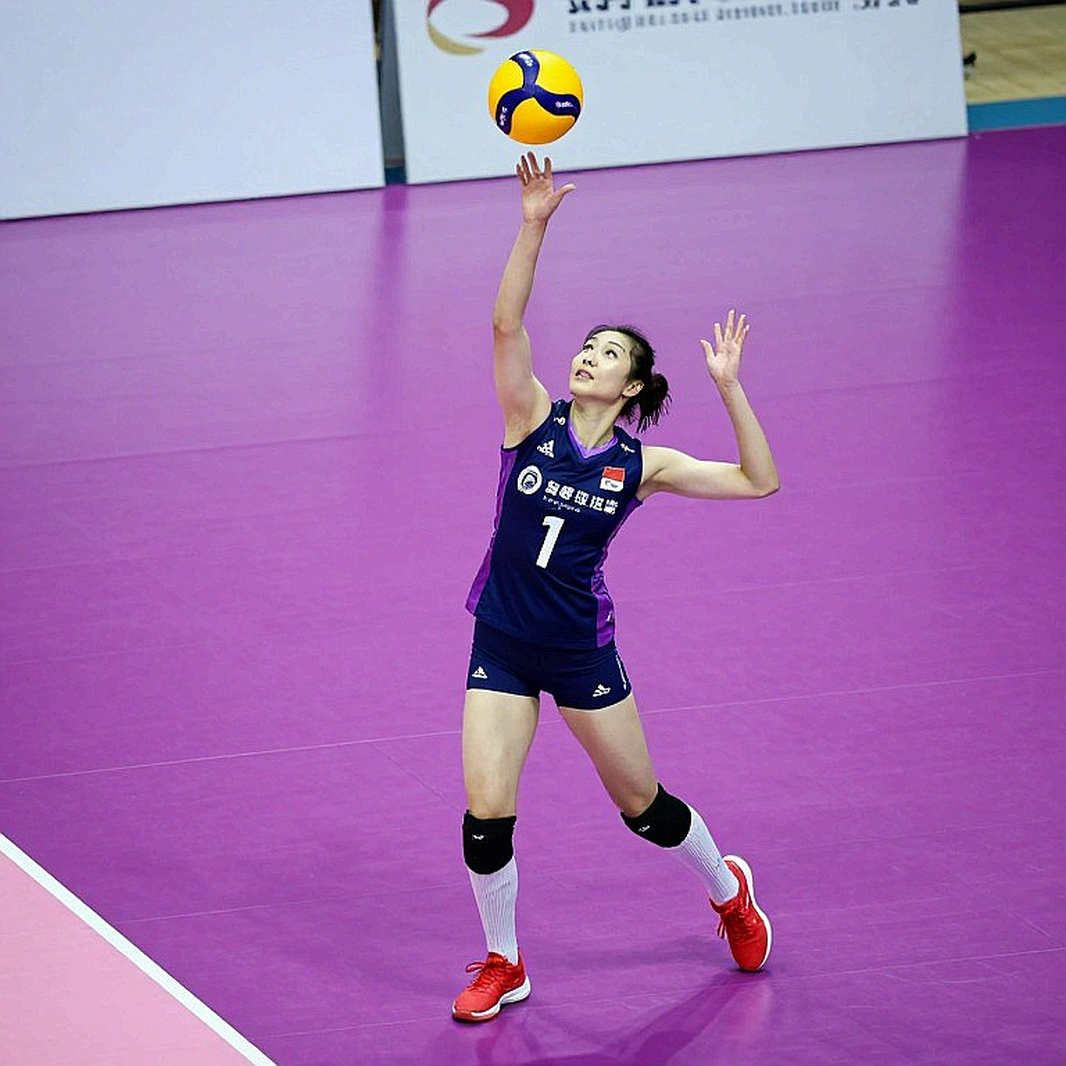
Data does not make decisions, it only kills doubts.
I do not write to prove I am right. I write to find out where I was wrong. If on 20 September Quynh Huong scores more than 15 points on positive efficiency against a block that takes 10 points a match, I will be the first to record that I underrated her.